
Richland County Busted Mugshots Records
Richland County keeps its arrest files in more than one set of hands. The arresting agency holds the incident report. Booking and detention material belongs to the Alvin S. Glenn Detention Center, known locally as ASGDC. Courts keep whatever case follows, and the South Carolina Department of Corrections steps in only after a sentence sends someone to state prison. A mugshot is simply the photo taken during booking. The booking record ties that photo to a date, an agency, the charge language, the custody event, and any later court information.
The County runs ASGDC for adults awaiting trial and those serving county sentences. Its Detention Center page is the official starting point for the facility and its detainee lookup. Custody status shifts fast, though. A dated entry or photo tells you about one moment, not about whether a person is still held today, so treat what you find as a snapshot rather than a standing fact.
The county detention page names ASGDC and its current-detainee function before any name search begins.
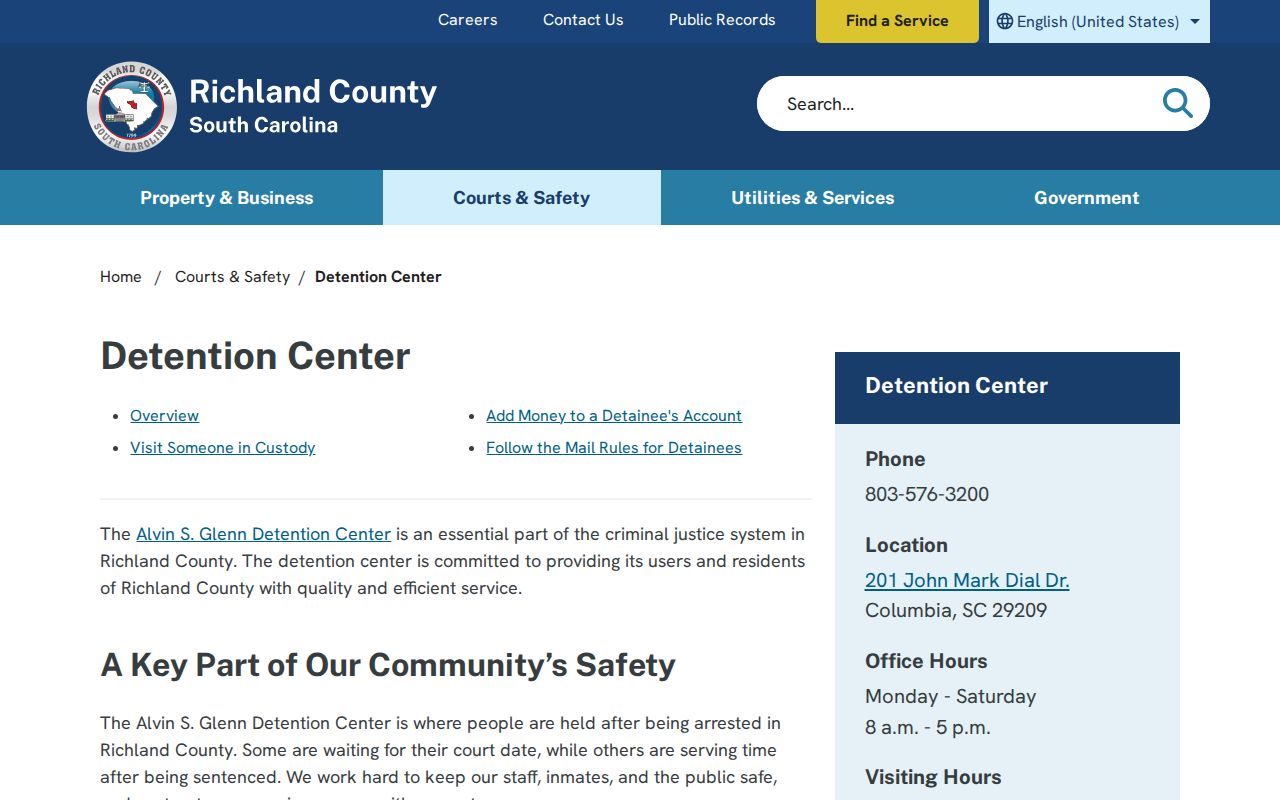
That facility page answers one narrow question: who is in custody right now. It is not an archive of every Richland booking, and it does not display a gallery of busted mugshots.
Important: A jail entry or booking photo shows a custody event, and the court record is where the outcome of the case lives.
Richland County Booking Record Requests
Send your request to the custodian who created the item. Booking records and photos made at the jail belong to ASGDC, so route that request through the Richland County public-records portal and name the Detention Center. Sheriff material, such as an RCSD incident report, goes through the RCSD written FOIA process instead. The strongest requests are specific. Give the legal name, date of birth if you have it, a narrow booking date, the arresting agency, a case or report number, and any booking or detainee number.
South Carolina FOIA opens the door to non-exempt records, not to every field in every file. Richland County may bill the real costs of searching, copying, and redacting, and it can ask for a deposit of up to 25 percent of the expected total. Timing rules matter too. State law generally allows 10 business days for a determination on records under 24 months old, or 20 business days for older ones, followed by production within 30 or 35 calendar days after the grant or deposit. Exempt or protected details can still be withheld or redacted.
| Requested item | Useful identifying details |
|---|---|
| ASGDC booking record | Legal name, date range, booking or detainee number, and arresting agency. |
| Booking photograph, if maintained | The same identifiers plus a request for any non-exempt image. |
| RCSD arrest or incident report | Incident date, location, report number, and case type. |
| Filed court material | Case number and the correct court agency, when known. |
A precise written request beats asking for a generic "mugshot packet," and it makes any partial denial easier to read. County-held material travels through the County portal. Sheriff-held files go to the RCSD office. The RCSD FOIA page posts the Sheriff's written-request requirements and its fee schedule.
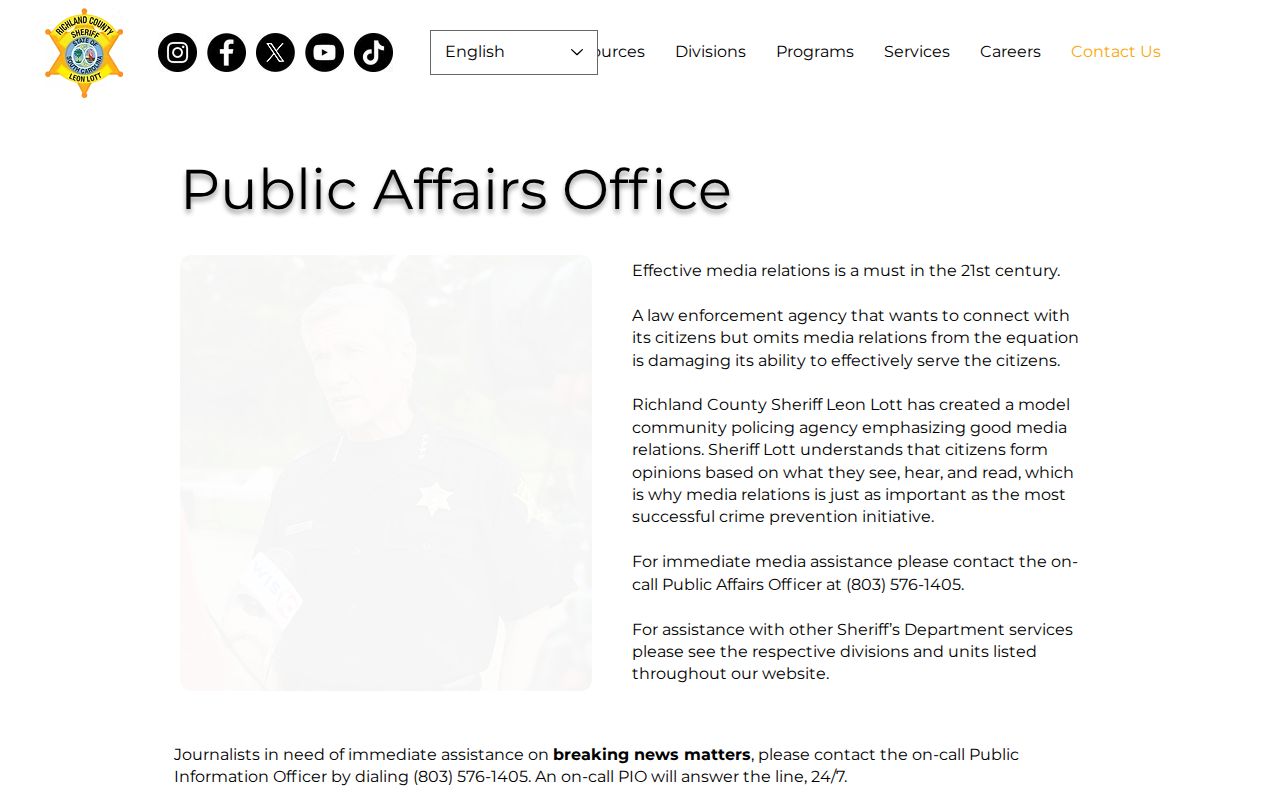
RCSD points requesters to its FOIA contact route rather than offering a general online booking-photo search. For ASGDC material, the County public-records portal names the request channel and lays out the County's cost-and-deposit framework.
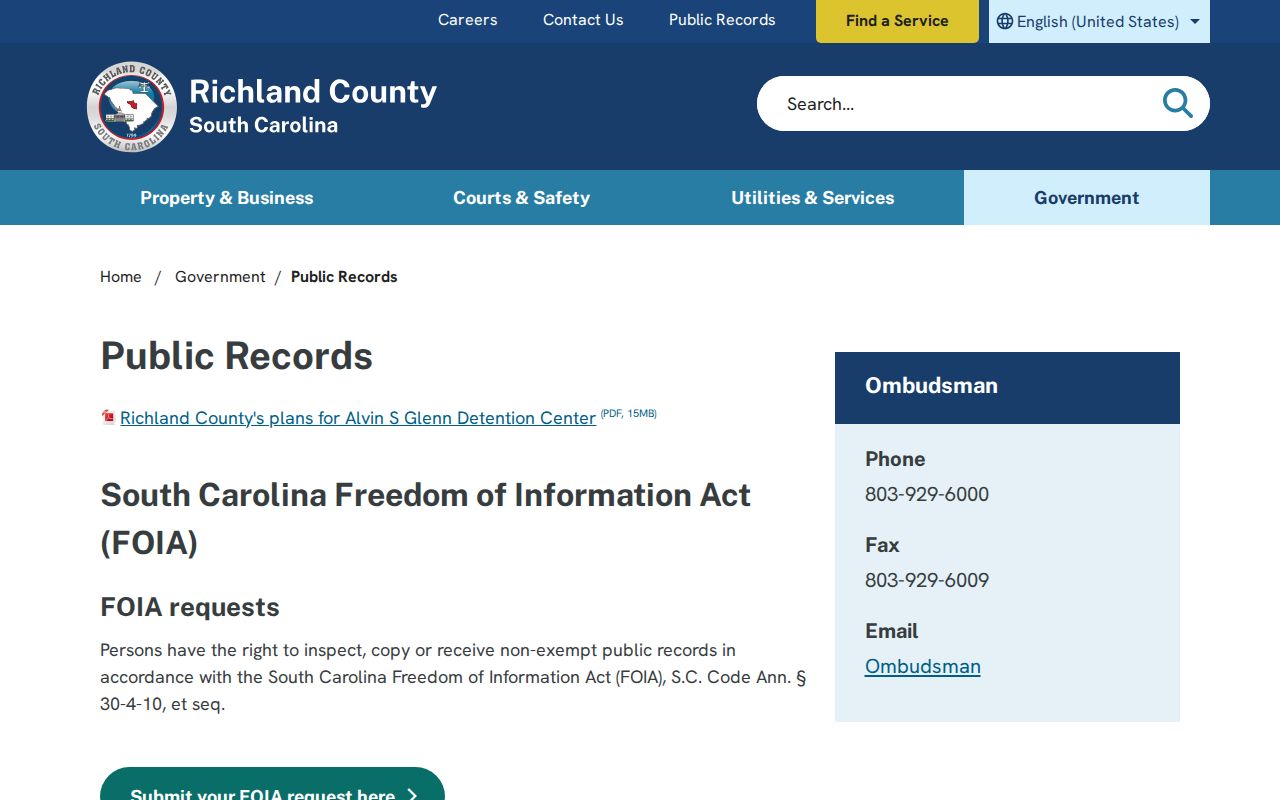
If material is withheld, ask the custodian to say what was held back and on what legal basis the denial or redaction rests.
- Separate the arrest report, detention booking record, photograph, and court file into distinct requests or questions.
- Name ASGDC or the arresting agency, then give the person’s legal name and a tight date range.
- Ask for a cost estimate before authorizing a broad request, and retain the case or booking identifier for the court search.
Note: RCSD’s online report-request workflow has limits and is not the general public route for a non-exempt booking record or booking photograph.
Richland Busted Mugshots and State Law
South Carolina Code § 17-1-60 regulates how arrest and booking records get published. The core rule is simple. It bars obtaining or supplying state booking material to a publisher that charges for removal or revision. That does not hide every government booking record from view, and it does not override a custodian's duty to apply FOIA exemptions, juvenile protections, redactions, or court orders. The state FOIA remains the path for a targeted request, though it never promises that an image will be released.
The same statute builds in a no-fee removal process for qualifying situations. The documented route calls for a certified-mail request with the arrest details, the location of the published item, and certified proof of a discharge, dismissal, expungement, or not-guilty result. A separate no-fee revision rule covers cases that ended in a plea to a lesser or different offense. Never pay a publisher to take anything down. Also, a vanished online entry does not by itself prove a record was expunged. For the full text, the official statutory source is the right place to read the rule.
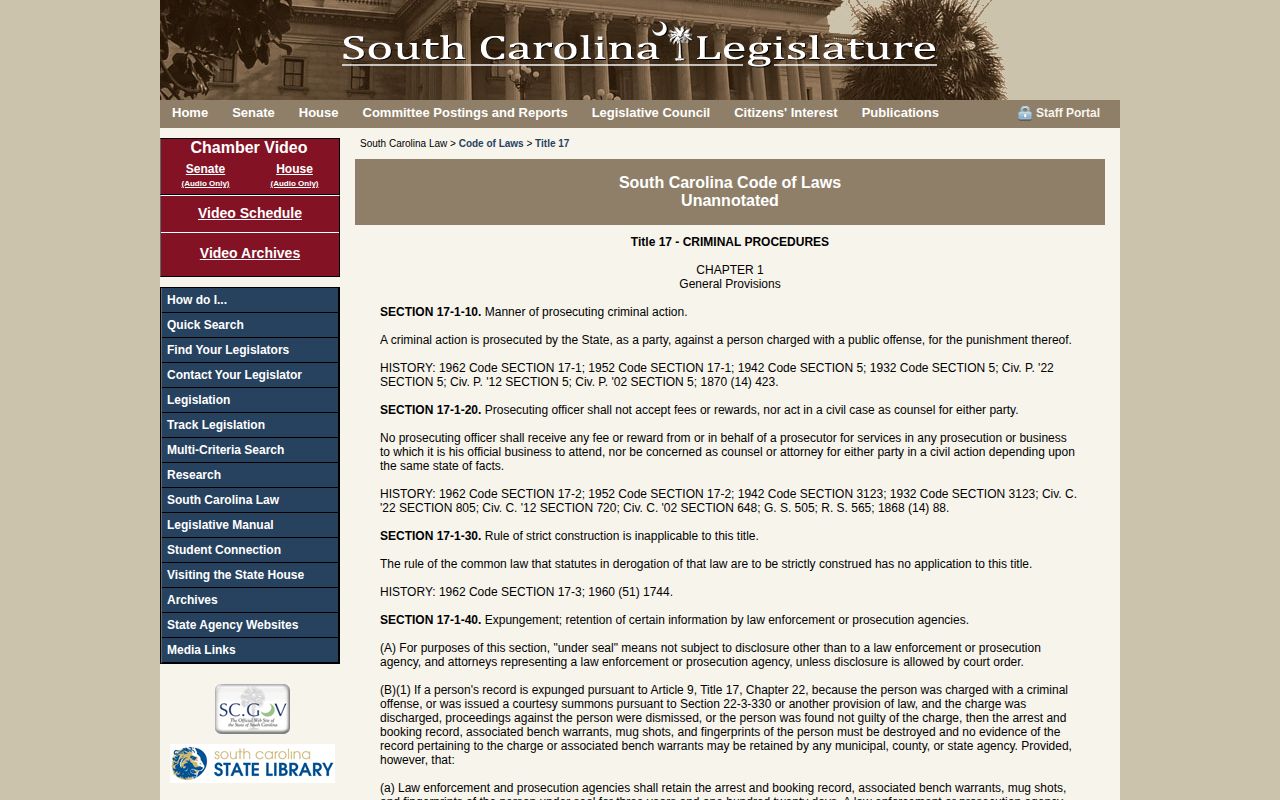
The law draws clear lines between government custodians, court-controlled records, and qualifying publisher conduct. Nowhere does it create a paid-removal path.
Expungement is its own legal process, one that can seal or destroy qualifying arrest, charge, or conviction material. Eligibility turns on the charge, the court, the result, and the person's history. The South Carolina Judicial Branch splits its expungement process into General Sessions, juvenile, and Magistrate or Municipal routes. For certain fingerprinted summary-court dismissals, not-guilty findings, or nolle prosequi results, court guidance describes an immediate no-cost process with a 30-day objection window and signing after day 31 when no objection arrives. The exceptions deserve close attention. The Judicial Branch resource is the official starting point for picking the right court-specific process.
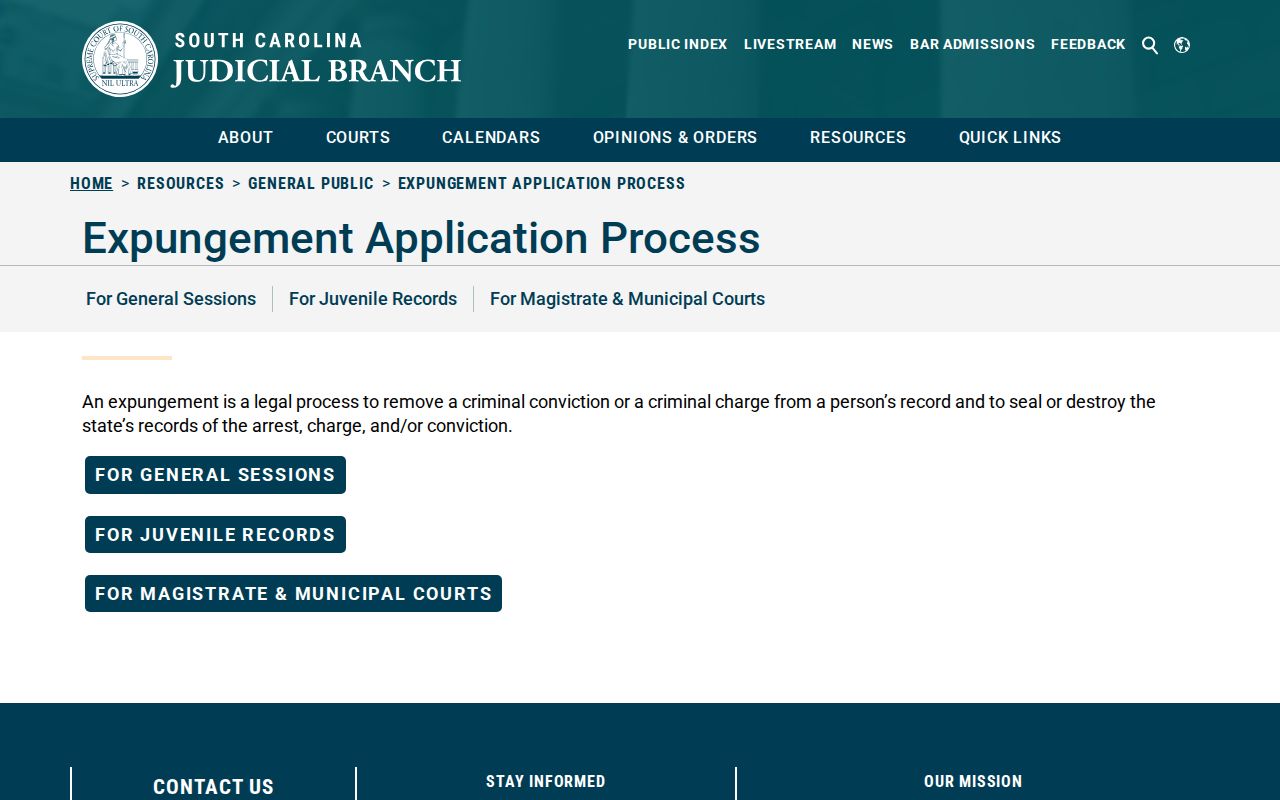
Once a court orders an expungement, the affected records stay sealed for the statutory period. They leave public view unless a judge later orders otherwise.
A private site's free-takedown promise is not a legal ruling. It is simply a posted policy. RecentlyBooked's stated policy, for instance, offers a no-fee removal request backed by supporting paperwork. Check the current terms before relying on any of it, and use the statutory route whenever it fits your situation.
Is the problem an error in an official record instead? Contact the agency that created or holds it, and bring the booking or case number. When a source page has already changed or vanished, Google's Remove Outdated Content tool can clear the stale search result. That tool cannot judge whether the live source itself is lawful.
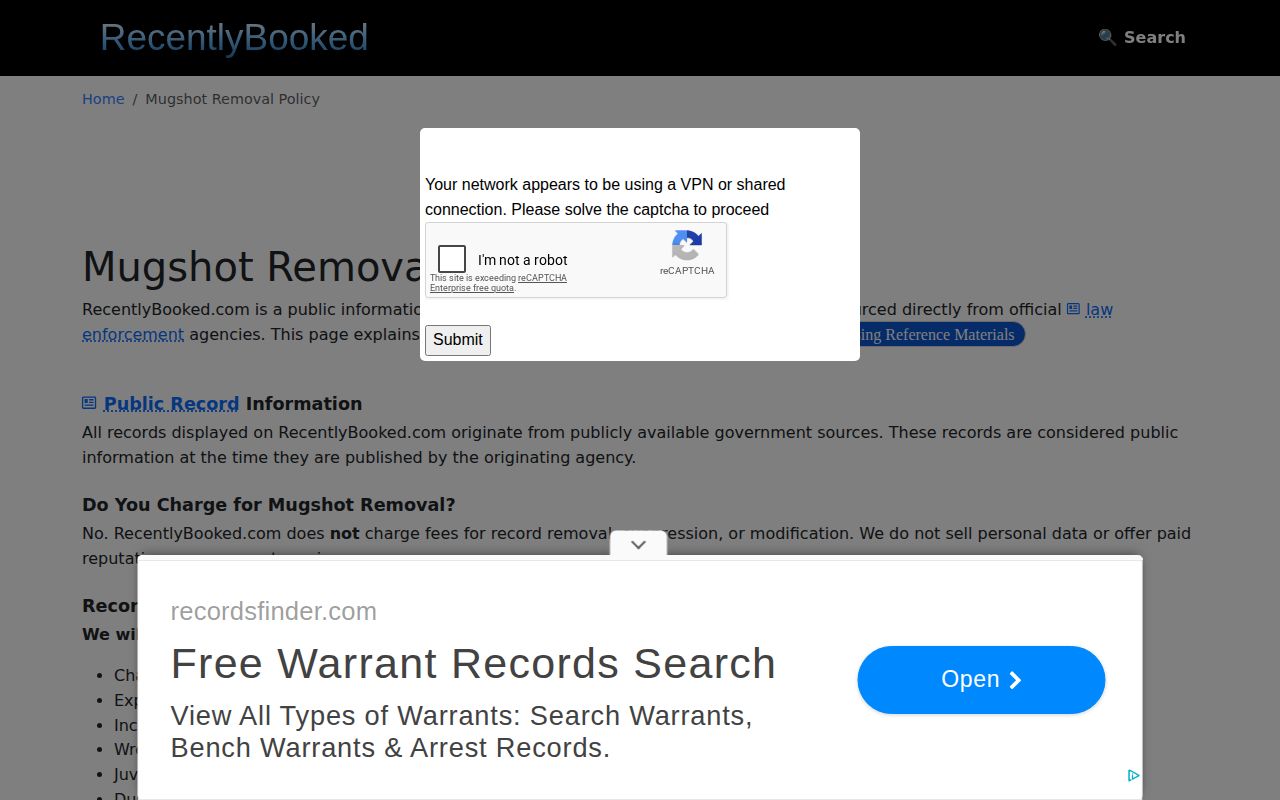
Keep the hierarchy straight. A publisher's policy sits below the official custodian, the statutory process, and any court order that actually sets a record's status.
Note: A publisher policy is a secondary reference, not a substitute for a County correction request, an expungement order, or a court disposition.
Richland County Busted Photo Limits
The county's public JMS landing page makes no promise of a booking photo. You get a simple form: last name, first name, and a CAPTCHA. There is no browse-all list, no date filter, no booking-number search, no release list, and no photo field shown. That is why a third-party page displaying an image proves nothing about the County's official photo practices or anyone's custody status.
Treat any online ASGDC photo as unverified. The official fallback is a direct records request to the County or ASGDC, granted if the photo is kept and non-exempt. Juvenile, sealed, expunged, victim-protected, and active-investigation material may simply be off limits. SCDC photos are a different animal, covering people already sentenced and serving time, not a fresh ASGDC booking.
- Booking
- The intake process that creates a county custody event and related detention material.
- Bond
- A court-set condition that may affect release; it can change as a case proceeds.
- Disposition
- The court’s outcome, such as a dismissal, plea, trial result, or sentence.
- Expungement
- A court-controlled process that can seal or destroy qualifying records under state law.
Note: A name match alone is not enough to identify a person, especially when a custody system provides limited public fields.
Find Richland County Recent Arrests
Start official. The ASGDC JMS Public Access search is the right first stop when someone may be in current Richland County custody. Enter the person's legal first and last name and finish the CAPTCHA. Note the time you checked, plus any agency, court, or identifier that shows up. A missing name means only that; the person may have been released, transferred, booked elsewhere, or tied to a protected or changed record.
When that search comes up empty, follow the record back to whoever created it. The arresting agency holds its own report. Richland County or ASGDC can produce detention booking items. The court case carries the outcome. Someone moved into state prison calls for SCDC, while federal and immigration systems track their own populations and tell you nothing about a Richland booking.
- Check the ASGDC name-and-CAPTCHA search for current county custody and note the time of the search.
- If the person is absent, verify the arresting agency and county of the event before requesting a report or booking record.
- Search the court case with the correct agency and case number to learn whether charges remain pending or reached a disposition.
- Use SCDC, BOP, or ICE only when the custody question fits that separate system.
Columbia, Cayce, and Irmo add a wrinkle. A city name alone never picks the jail. The countywide process gets city-level detail, including the Richland and Lexington boundary issue, on Columbia Busted Mugshots and the other local city pages.
Richland County Busted Roster Search
ASGDC's JMS Public Access tool answers one question. Who is in custody right now? The County brands it Detainee Lookup. It is not a daily arrest log. There is no same-day, 48-hour, or 72-hour chronological view, and no released-person archive appears anywhere. The timestamp on a result reflects the moment, not a documented update schedule. Cite the time you searched rather than claiming the tool catches every recent booking.
| Public search field | What the official landing screen confirms |
|---|---|
| Last name | Required name field for a current-detainee inquiry. |
| First name | Required name field for a current-detainee inquiry. |
| CAPTCHA | Required before submitting the official public query. |
| Not shown | No booking-number search, date range, charge filter, facility selector, release list, or browse-all option on the landing form. |
A result answers a moment-in-time custody question for the county. That is all it does. It cannot stand in for a court case, a released-person record, an SCDC search, or a federal locator. No RCSD or ASGDC app exists with a verified jail search, release alerts, or photos. P3 Tips has one job. It handles anonymous crime tips, not inmate or mugshot lookups.
Richland County Booking Feed Gaps
No official Richland County or ASGDC feed exists. Same-day, 24-hour, 48-hour, 72-hour, weekly, and released-person bookings all fall outside it. RCSD and CPD press releases announce selected arrests and investigations, but they are editorial choices, not complete arrest logs. Cayce's monthly snapshots are statistics, not person-level booking lists. That gap is itself useful. It pushes any time-sensitive question back toward JMS, the record custodian, and the court.
SLED's 2024 Crime in South Carolina report tallies 8,948 Richland County arrests for the year. Treat that as aggregate context only. It is neither a current jail count nor a booking feed. An unofficial page can linger online long after a jail stay ends. The live JMS search tracks current county custody, and the court record shows what happened next.
Question: Can a press release confirm a person is still in jail? Answer: No. A release documents a selected event, not a continuous detention roster. Check the current ASGDC system first, then the court record.
Richland Busted Bookings and City Lines
Let official sources lead every Richland lookup. ASGDC JMS handles current county detention. Agency record offices hold the reports they created. Public Index and the Clerk cover court proceedings. The two verified Richland publisher pages below are secondary, unofficial landscape sources. Their dates, images, and charge text cannot confirm custody, photo provenance, completeness, or a court outcome.
| Channel | Custody or record scope | Photo posture | How to use it |
|---|---|---|---|
| ASGDC JMS | Current Richland County detention | Not promised online | Search by name and CAPTCHA. |
| County or agency request | Named detention or arrest record | Only if maintained and non-exempt | Request from the right custodian. |
| Court record | Case events and disposition | Not a booking-photo source | Use the court agency and case number. |
| SCDC | Current sentenced state-prison custody | Documented photo feature | Use only after state-prison transfer. |
| RecentlyBooked or Arrests.org | Unofficial retained publisher display | May display images | Verify every detail with the agency and court. |
Two third-party sites publish Richland booking displays. Neither one is official. RecentlyBooked's Richland page is run by its publisher. Arrests.org's Richland filter applies its own county labels and keeps older entries on file. Treat both with care. City labels cause the most trouble here. Cayce and Irmo sit partly in Richland and partly in Lexington. Before assuming a city tag means a Richland detention, check where the incident actually happened and which agency made the arrest.
- Columbia Busted Mugshots: CPD’s Richland-side bond-court connection leads to ASGDC, while Lexington-side events follow another path.
- Cayce Busted Mugshots: monthly city statistics are not a jail roster, and the incident county controls custody routing.
- Irmo Busted Mugshots: no IPD public arrest log was verified, so the Town records route and event county matter.
Note: A county label on an unofficial publisher page cannot prove the arresting agency, the side of a city boundary, or current detention.
Richland County Court Record Handoff
A booking is only the first step. Everything after it belongs to the courts. Arraignment, bond, motions, pleas, trials, dismissals, sentences, and appeals all live there. Start with the South Carolina Judicial Branch Public Index and pick the right Richland court agency. Hang onto the case number too, because the Clerk will want it. For felony material, Richland General Sessions keeps Clerk files that may hold warrants, indictments, bond papers, and sentence sheets.
One local split trips people up. The Richland Clerk does not keep Magistrate or Summary Court charges. Columbia Municipal Court runs on its own track. A single person can have matters pending in more than one court, so the two questions stay distinct. A jail search tells you who is in custody right now; a court search tells you what happened next. The General Sessions page below outlines the Clerk's criminal-records role for filed court material.
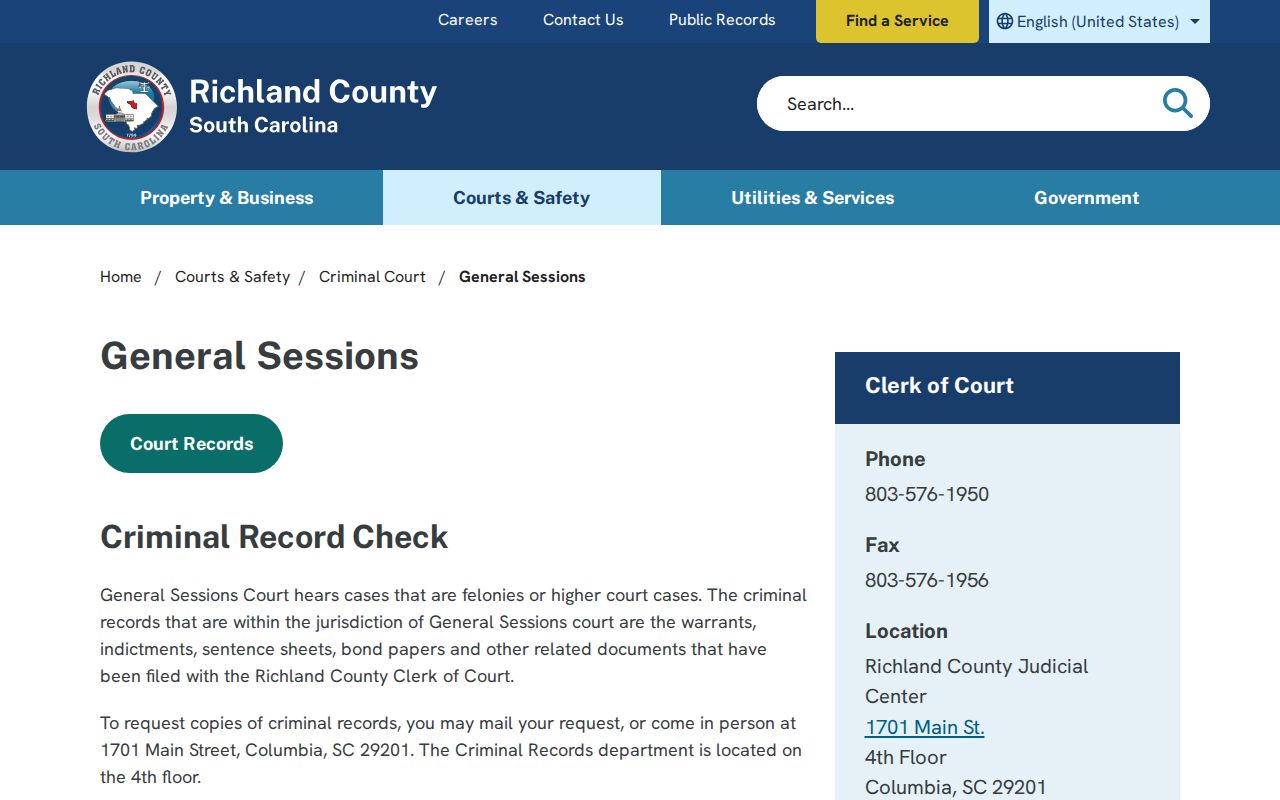
A case number beats a name match every time. Give the Clerk the number whenever you can, since shared names and misspellings make name-only searches unreliable.
Richland County Busted Mugshots After Transfer
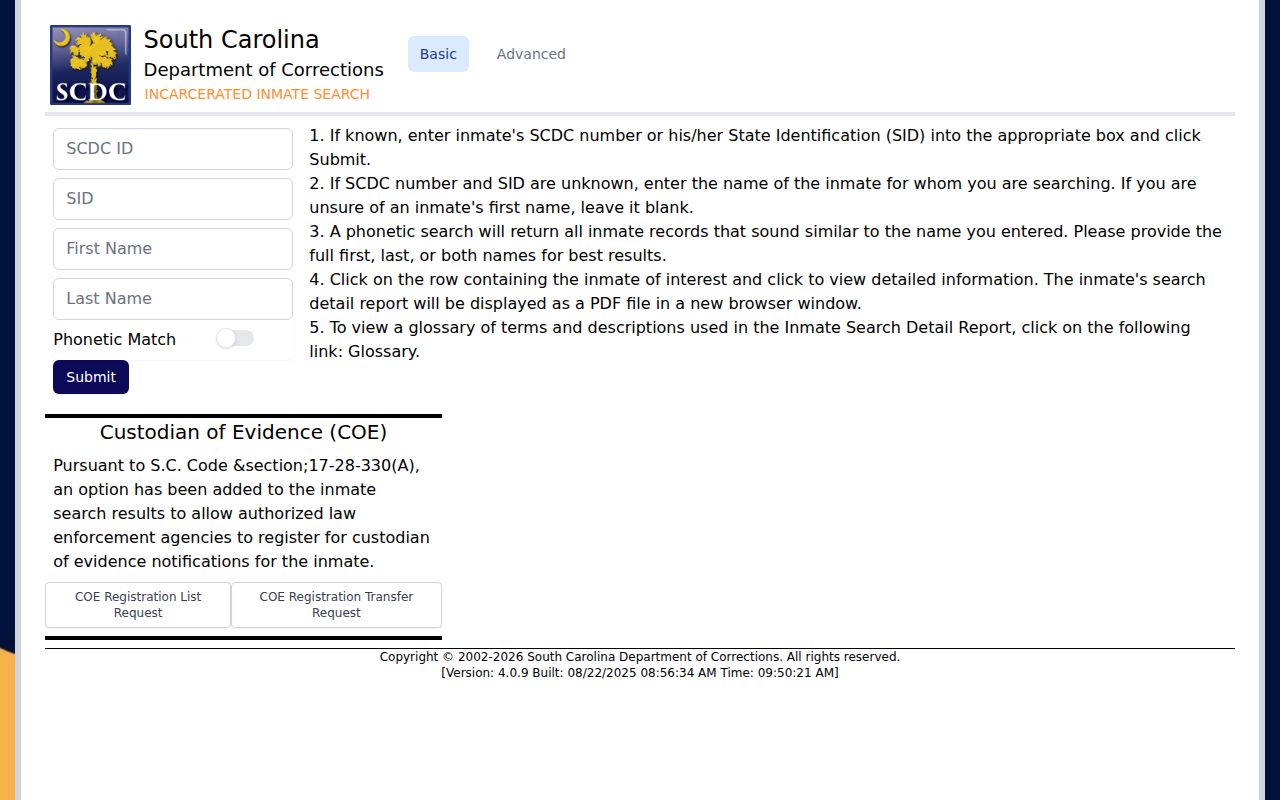
SCDC is the official state-prison channel that shows photos. It will not work as an ASGDC booking lookup. Its inmate-search disclaimer covers only people sentenced to and incarcerated at SCDC as of the previous midnight. That search can supply photographs and public information. It leaves out county detainees, released people, those on community supervision, juveniles, and current SCDC fugitives. Before trusting a match, compare the name against the SCDC number and the court record. The official SCDC search materials draw a clear line between state-prison custody and the County jail system.
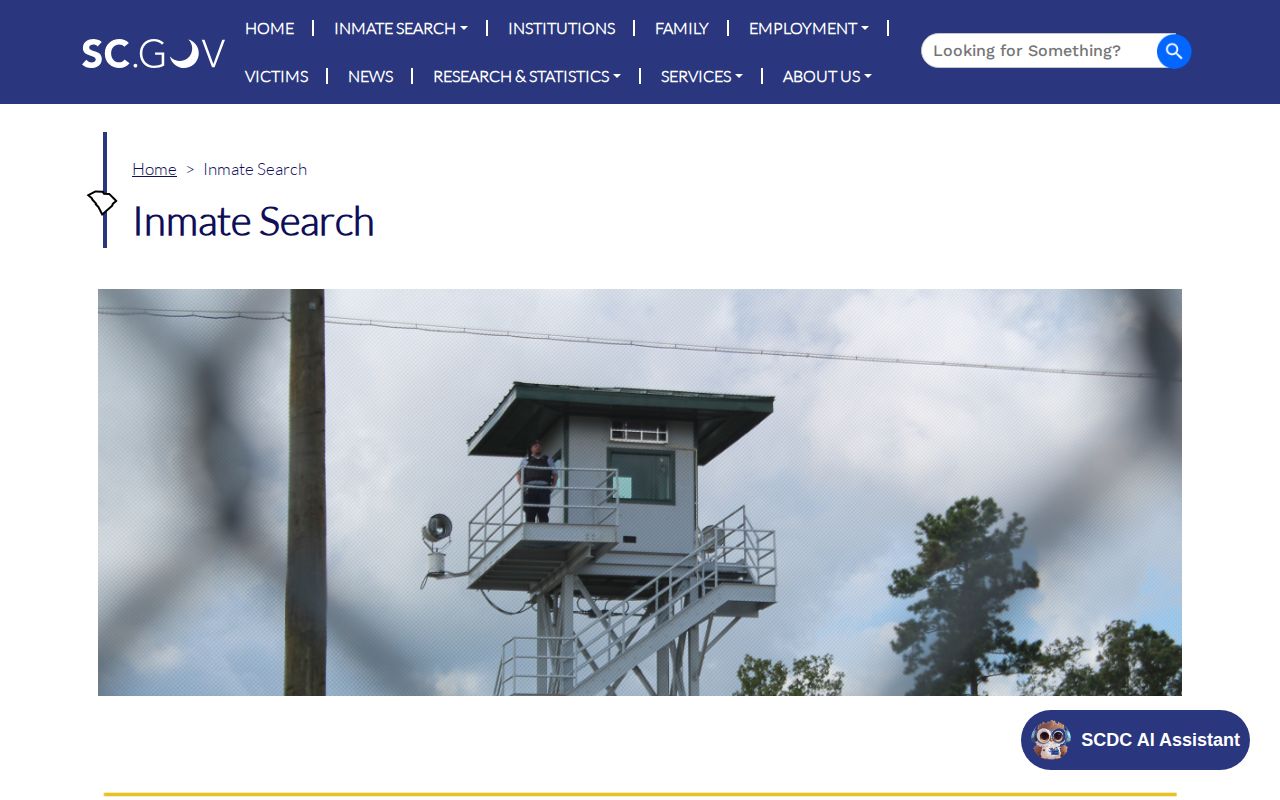
Seeing a current SCDC photo does not mean the person was just booked at ASGDC or is still held in County detention. The direct SCDC public search is the state's official prison lookup.
The Federal Bureau of Prisons plays by its own rules. Its results show BOP custody, not county detention. No photo appears in the documented public fields either. ICE's locator is different again. It tracks a separate custody population altogether. Match the tool to the actual custody setting. Then return to the responsible court for the case outcome.
Richland Busted Search Timing
ASGDC's public interface is a current-detainee name search with a CAPTCHA, not a chronological booking log. There is no official same-day or 72-hour feed. That gap matters. A person can be arrested and released before anyone runs a search, so a blank result screen does not prove there was no booking, rule out another county, or signal a dismissal. Write down the time you checked. Then take the question to the arresting agency, a County request, or the court record when timing still counts.
Richland Busted Photo Promise
Richland's public JMS form promises nothing about photos. The honest summary fits in one line: the official online search does not guarantee a booking photo. Want a named, non-exempt image? Ask the County or ASGDC custodian directly. Don't assume a publisher's retained picture came from a current County record.
Richland Busted Tips App
RCSD's app connection runs through P3 Tips with Crime Stoppers. That's an anonymous channel for reporting crime. It is not a jail search. It is not a release-alert service, booking feed, or photo source. For current custody facts, use ASGDC. To confirm a case, use the right court or custodian. Keeping those tools straight keeps a tip line from being mistaken for a records system.
Richland County Court Agency Split
General Sessions is not the answer to every Richland charge. The Clerk holds no Magistrate or Summary Court material. Columbia Municipal Court can be its own path too. Use Public Index to select the correct county and court agency. Then verify the filing with that clerk. The split matters when a booking spans court levels. It also matters when an arrest started in a city that crosses county lines.
Richland Busted City Boundaries
Columbia, Cayce, and Irmo each need a county-specific read. Cayce and Irmo stretch into Lexington County, and CPD lists different bond-court locations for its Richland-side and Lexington-side arrests. A city name, a mailing address, or a police agency does not decide the jail on its own. Pin down the event location and receiving county first. Then use ASGDC for the Richland custody question.
Richland County Expungement Timing
Some fingerprinted summary-court matters qualify for a fast, no-cost expungement. That's under South Carolina court guidance, and only when they end in a dismissal, a not-guilty finding, or a nolle prosequi. The timing is specific. Prosecution or law enforcement can object within 30 days. An uncontested order then gets signed no earlier than day 31 and no later than day 40. Eligibility exceptions, pending related charges, and the court type still control the outcome. Get the court result first. Then ask a custodian about sealed material.
Richland County Arrest Statistics
SLED counted 8,948 arrests in Richland County for 2024. The figure comes from its annual Crime in South Carolina report. It gives you a sense of scale. It won't tell you who was arrested. It won't show who sits in jail tonight or which bookings happened last week. The same gap explains why scattered news releases can never serve as a full feed of county arrest activity. For one person, go straight to a name-based custody, agency, or court search.
Richland Booking Custodian Fees
One office's fee schedule never speaks for the rest. RCSD charges $37 an hour for retrieval or redaction, $36 per archive box with room for increases, $5 per disc, and $0.15 per printed page. The County bills on an actual-cost basis and may require a deposit up front. CPD and the city custodians set their own rates. So find the office that created the record first, then request an estimate from that custodian before casting a wide net.
Richland County Booking Court Handoff
ASGDC shows who is in County detention now. Court outcomes live elsewhere. Public Index and the Clerk hold those answers, and that handoff matters most after release, transfer, or a changed charge. General Sessions keeps filed warrants, indictments, bond papers, sentence sheets, and related files. Lower-court cases follow their own routes. Keep two details close: the booking identifier and the case number. Those let you match custody records with court records without guesswork.
Richland County Booking Record Retention
ASGDC has no fixed online retention period. That goes for booking photographs, a released-person photo archive, and searches of old bookings alike. Start a historical request with the County or the ASGDC custodian. Bring the name, date, and booking number. Ask plainly whether the record is still held, sealed, destroyed under an approved schedule, or moved elsewhere. Never lift a retention number from a municipal schedule and call it ASGDC policy.
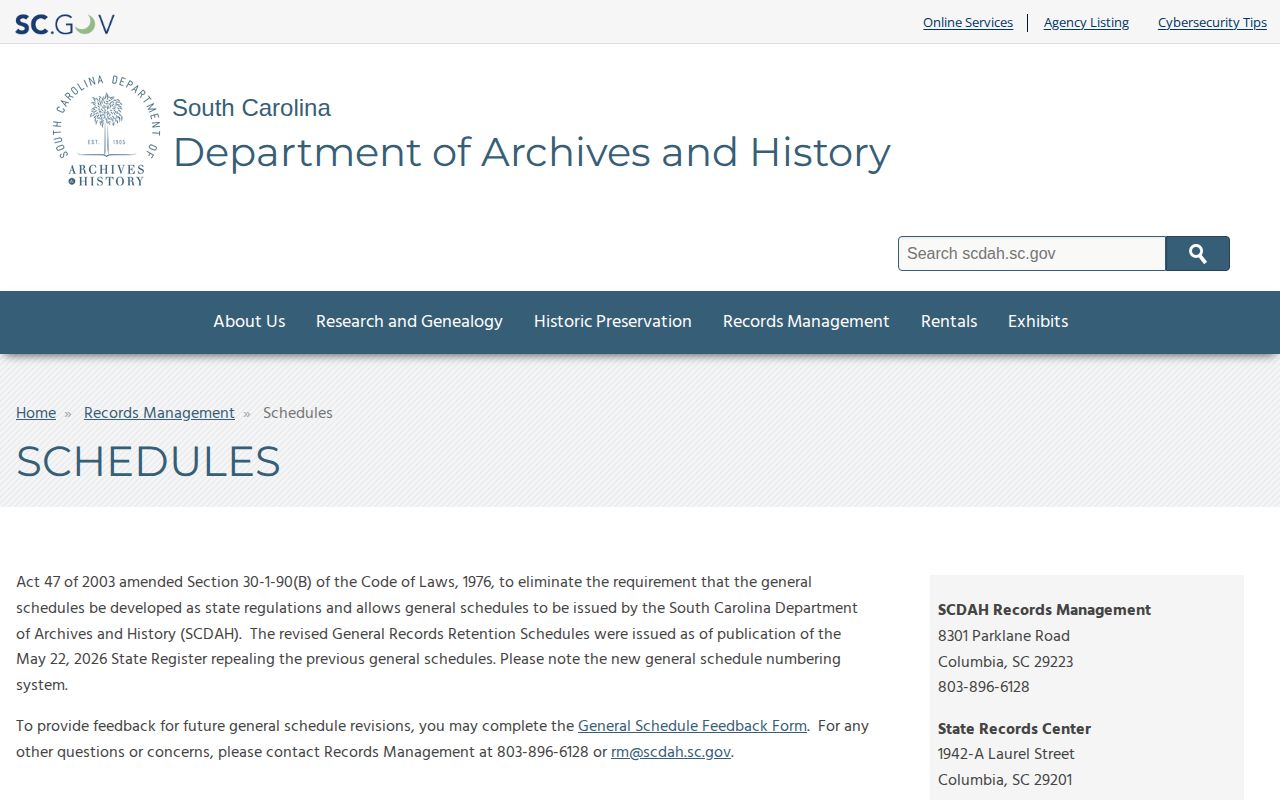
The South Carolina Department of Archives and History schedule page posts the state's records-management schedules. A schedule alone won't confirm that a particular booking record survived or landed somewhere new.
A confirmed permanent transfer changes the picture. Records Management at SCDAH can then speak to that specific record series. Filed court material stays a question for the Clerk. SCDC history belongs to SCDC. An expungement or sealing order governs public access, even if an old booking record was otherwise kept on file.